Social Recordings researches the ethics and aesthetics of recording (with) others. How can listening be a relational and critical act? How can forms of open listening enter into dialogue with the unknown? And how do we contribute to the sonic space we share?
Through a process-based practice, Social Recordings produces a body of work that is a hybrid of field recordings, interviews, sonic encounters & ethnographies, improvisations, vocal work, electroacoustic situations, experimental journalism, found and archival sounds. It is often supplemented with photographic and filmic material — the last serving as a support, a silent witness or visual guide, of the sonic.
Exploring dialogical practices like feedbacking and playbacking (on location) as a means of communication, the act of listening triggers a sonic answer, and recordings are given an oscillating status of “transmitter” and “transfer agent”.
The act of listening (or re-listening) is an act of giving (back) to each other and a process of learning from each other’s ways of resonating. As such, collective listening is a necessity for a non-conclusive practice which aims to transcend the individual act of making decisions, by resonating together again.
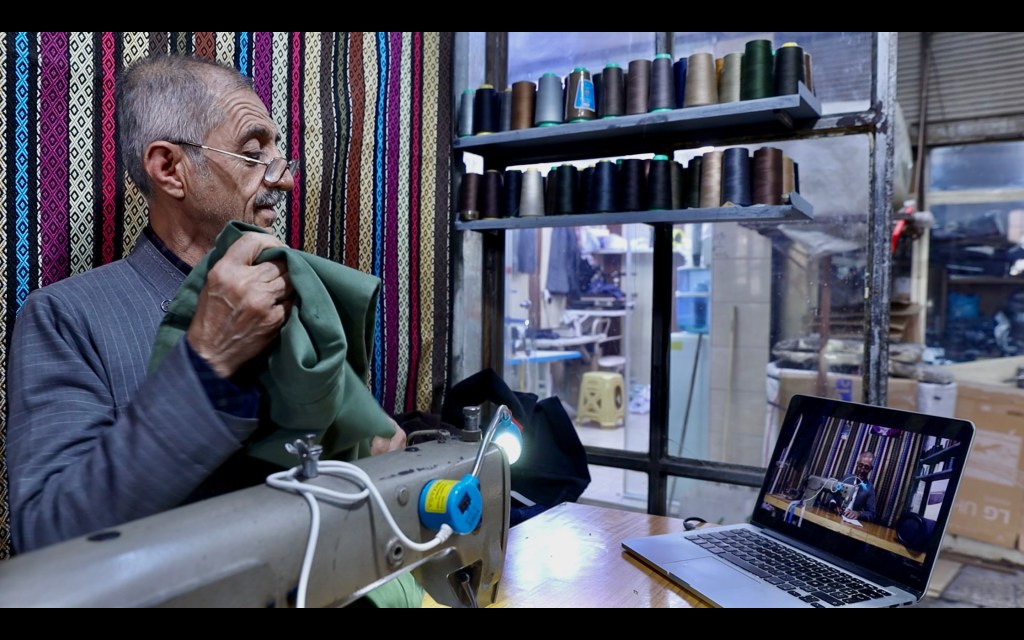
Practically, whenever possible, Social Recordings aims to return with sounds and images to their origins, in order to “give back” what truly belongs to those who appear in the recordings. By attending these playbacks together, a relationship is constructed between who and what is documented and the recording artist(s).
All recordings are made in a variety of social, pedagogical and artistic contexts, usually in collaboration with others, with artists and non-artists, with adults, teenagers, children, toddlers and babies.
It is an ongoing challenge to ensure that the people initially recorded are the first audiences of their documented selves. By making new recordings in the place where the original recordings are first played, choices are made together— instant processing and mutual editing of what is presented later for an audience. later for an audience.
 Social Recordings